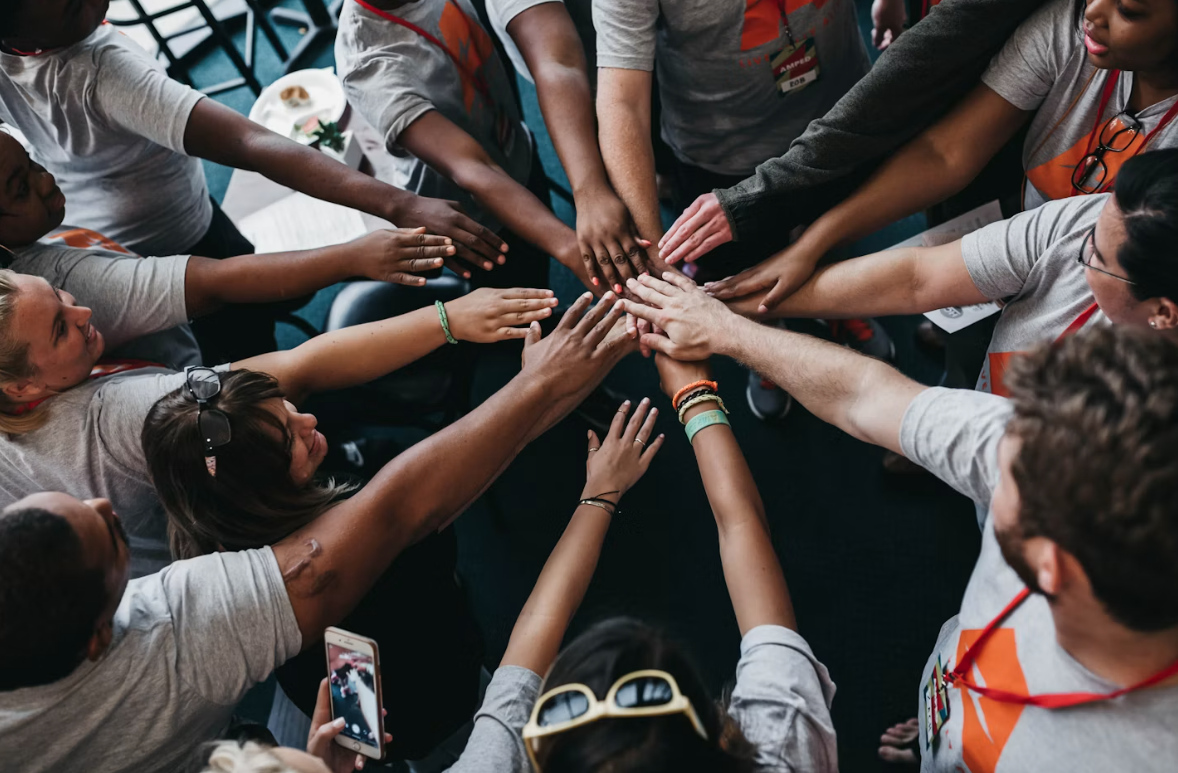
Every event has two groups of people making it happen. There are community volunteers, people from outside your organization who sign up to help. And there is your organizing team, the staff members, board members, city employees, and committee members who are coordinating, running stations, and keeping things moving from the inside.
Both groups need to know where to be, what to do, and how to stay in the loop when things change. But in practice, they tend to get coordinated very differently.
That difference is what this post is about.
Why the organizing team is a different coordination challenge
Your organizing team does not fit the community volunteer model. You are not recruiting them, you are deploying them. The coordination is about shift assignments, schedule visibility, attendance, and making sure the right people have the right information at the right time.
Because most event platforms were designed around community-facing sign-up flows, organizing team coordination tends to happen outside the main system, through emails, shared documents, or direct messages, running parallel to everything else.
What that looks like in practice
For city and government teams running community festivals, parks and recreation events, or employee appreciation days, this usually means managing two separate streams. The community-facing parts of the event run through one platform. The internal team runs through everything else.
For nonprofits managing board members, committee volunteers, and staff across fundraising events and food drives, it is a similar picture. The people closest to the organization often have the least structured coordination experience, not because anyone planned it that way, but because the tools available were built for a different scenario.
For schools, chambers of commerce, and organizations running events year-round, the same pattern shows up. Your organizing team knows what they are doing. The question is whether the infrastructure around them makes their job easier or adds to it.
What changes when it is handled in one place
When your organizing team is coordinated within the same platform you are using for everything else, a few things get simpler.
Shift assignments and schedule updates live where people can actually see them. Attendance and hours are tracked as part of the event record. Communications reach your team through the same channel as the rest of your event operations. And after the event, you have a clear picture of how everything was staffed without pulling information from multiple places.
Why we built this into PrimeEventZ
PrimeEventZ already gives organizers a way to manage community volunteers. Posting opportunities, collecting sign-ups, managing assignments, tracking hours, handling communications. That side of volunteer coordination has been part of the platform from the start.
What kept coming up in conversations with cities, nonprofits, and chambers was a separate but related problem. The same organizations using the platform for community volunteers were coordinating their own internal teams through a completely different set of tools. Not because they wanted to, but because nothing they had was built to handle both in the same place.
What we built is what we now call internal volunteer management. It lets organizers create private opportunities visible only to authorized users within their organization, whether that is city employees, nonprofit staff, board members, or committee teams. Shift management, attendance tracking, hour logging, and team communication all live in the same platform as community volunteer coordination, registration, sponsor management, and marketing outreach.
Both groups, community volunteers and your organizing team, are managed in one place. Neither gets lost in the other.
If you are coordinating a team of your own people across a full event calendar and want to see how that works inside PrimeEventZ, it is worth a look.
PrimeEventZ is an all-in-one event management platform built for city governments, nonprofits, chambers of commerce, and civic organizations. See how it works in three minutes: youtube.com/watch?v=Ty54gsFoJrQ | primeeventz.com
Frequently Asked Questions
What is internal volunteer management?
It is a way of coordinating your own staff, employees, or organizing team members for events through a private, controlled system within your event platform, separate from community volunteer sign-ups. Only authorized users within your organization can access these opportunities.
How do city governments coordinate employee volunteers for community events?
City teams often manage internal staff coordination separately from the rest of their event operations. A platform with built-in internal volunteer management lets departments handle shift assignments, attendance, and team communication in one place alongside everything else.
Can nonprofits manage board members and staff in the same platform as community volunteers?
Yes. PrimeEventZ lets nonprofits run community-facing volunteer opportunities alongside private internal ones, so board members, committee volunteers, and staff are coordinated in the same system without the two audiences overlapping.
What is the difference between community volunteers and an organizing team?
Community volunteers are recruited from the public and sign up through an open process. Your organizing team, employees, board members, committee members, are people already part of your organization who are assigned to support events as part of their role. Internal volunteer management is built specifically for that second group.